
three weeks on a typeface (I was avoiding the real work)
what actually builds recognition, and the five questions that matter more than your moodboard

Welcome to day 22 of my 30-day writing series, Nightcap.
It’s time to focus on the things that really matter.
I say this as someone who has spent a nonsensical amount of time overthinking colour palettes, typefaces and logo direction for my incoming creative platform. It took several weeks of internal intervention (yes, that’s a thing) for me to realise that they don’t really matter. Not when weighed up against what the work will actually deliver. How people will connect to what I’m building.
Those matter far more than whether your logo is a serif or monospaced.
it’s not doing as much as you think it is
Establishing a clear brand identity is important - consistency invites recognition, which brings familiarity. I’m certainly not saying to overlook those things, because I never would for myself. I want you to understand that discernment is key. If you can recognise when your meticulous work to develop the brand colours might be seeping into overthinking territory, you’ll probably be fine as long as you act on it. If you can’t, and you find yourself agonising over taupes and neutrals, then it’s time to pause.
You may not consider yourself to have a favourite brand but I’m sure you have a favoured one - electronics, activewear, supermarket, or even mouthwash. Take a moment to consider why you choose them over another. Is it the packaging, or is it the quality of the product, the frequency and impact of their ad campaigns, the celebrity endorsement or perhaps just how the product makes you feel?
Usually, it’s got nothing to with their logo. When you think about that, it might help to put things into perspective.
developing a point of view
It’s a specific context, but I learnt something from researching consumer behaviour after brands respond to wars happening around the world. Brands like Nestlé tried to stay neutral. Brands like Mondelez and PepsiCo tried too, on the basis of humanitarian grounds. Each of these saw public criticism. Neutrality is no longer an acceptable response anymore, not in the courtroom of public opinion. H&M understood that and even committed to cash losses to put action to word.
Anytime I think of brands that have maintained their values through societal and political strife, I always think of Ben & Jerry’s. So important is it to the co-founders Ben Cohen and Jerry Greenfield to preserve their internal board of social mission that Jerry chose to resign in September 2025. Leaving after 47 years, he cited he couldn’t work for a brand that was being ‘silenced’ by corporate ownership - referring to its parent company Unilever. For Ben and for Jerry, political and societal activism was ingrained within the brand. Removing that eroded the very essence of what it was.
However, this isn’t a case for every brand to be like Ben & Jerry’s. Though what is important in 2026 is to at least have a clear point a view. Clear values which aren’t just a webpage buried in the footer notes of the company website. Finding what that is for your brand isn’t easy. Something which you are willing to defend if ever called to. Something you’ll rationalise when it’s scrutinised.
There were five core questions which helped me:
What do I passionately believe, which differs from most others in my industry?
What am I willing to lose to protect that belief?
What’s one thing I disagree with about how my industry operates?
If my brand was a person, how would they behave in a room full of peers in the industry?
What am I building as a direct response to the friction I feel within the industry?
learning from history
Now, it would be irresponsible of me to overstate the case against logos. Sometimes consumers do have a real, negative reaction to one and when they do, it matters. Just look at Cracker Barrel, the London 2012 Olympics and the Cleveland Indians.
Whilst it might seem simple, the solution is to do the research. Understand the provenance behind the imagery or language. Understand the history for specific ethnic groups or communities. That’s the work, not the typeface.
Once you’ve done that work, great.
Just get started.
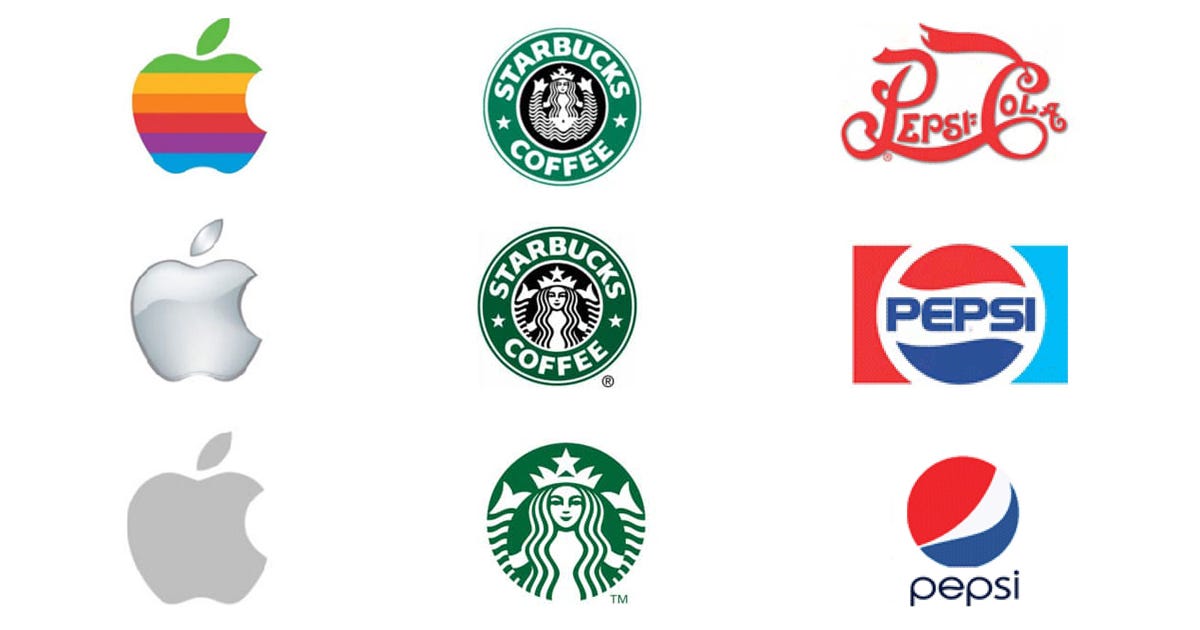
Rebrands happen because brands evolve. What you decide today isn’t a life sentence. Stop waiting for permission and just start.
if you’ve enjoyed this then i’d love for you to stay with me.
Industry insight, kept In House.
I also hope your project goes well.
I loved this especially the conclusion!